
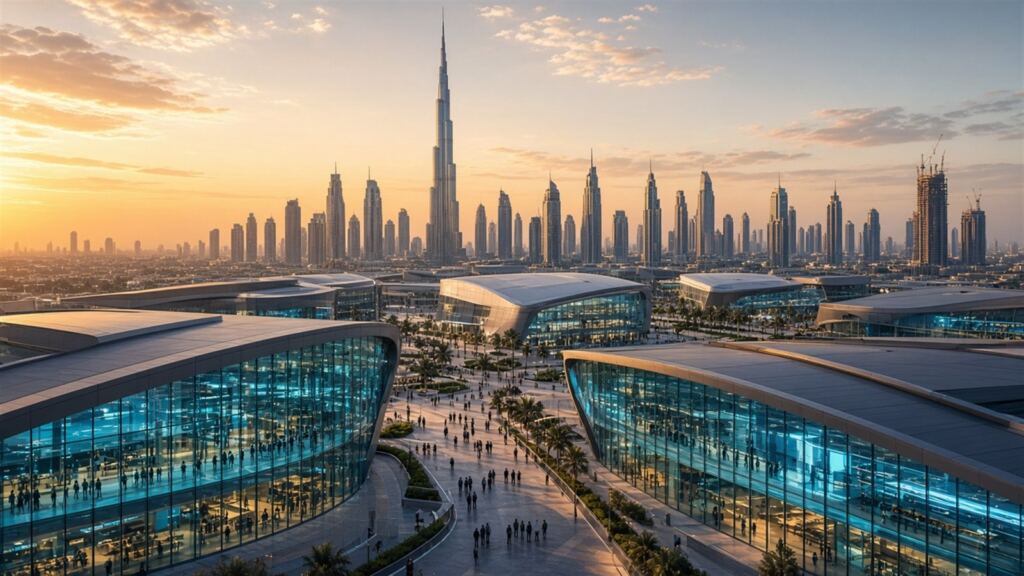
GISEC 2026 opened today, 16 September 2026, at the Dubai Exhibition Centre in Expo City Dubai and runs through 18 September. The fifteenth edition is framed as “Cyber First: The New Digital Order,” with a clear focus on the role of artificial intelligence in cybersecurity.
Organisers say the event will host more than 25,000 information-security professionals from over 180 countries and more than 750 cybersecurity brands. It is held with the UAE Cyber Security Council, the Dubai Electronic Security Centre, the UAE Ministry of Interior, and Dubai Police.
Why AI became the main theme of GISEC 2026
The shift this year is that AI is no longer a side topic on the show floor.
In the official programme, AI shows up across the event. The Main Stage covers deepfakes, GenAI, and next-generation ransomware. X-Labs looks at AI security, IoT, 5G, and the cloud.
That focus matches the last few months in cybersecurity. Language models can speed up parts of an attacker’s work: phishing copy, social engineering, analysing information, even helping with code. On the other side, security teams use AI to sift large volumes of telemetry, spot unusual behaviour, rank alerts, and automate parts of incident response.
The live question is no longer only “how do we use AI in security?” It is how to protect AI infrastructure and models from attack, and how to use AI itself for better defence.
Gulf Business’s opening-day coverage also put AI among the main subjects discussed by industry leaders at the event.
From ransomware to deepfakes
A large part of this year’s programme is about how new technology changes the shape of attacks.
Deepfakes are a clear example. Synthetic voice, fake video, and data scraped from social networks can make social engineering harder to spot.
Ransomware is no longer only about encrypting files. In recent years attackers have moved more toward data theft, extortion, and abusing the access they already have.
Putting deepfakes, GenAI, and next-generation ransomware on the main stage is a signal that organisers see those shifts as a real part of the threat picture ahead.
OT security and critical infrastructure
GISEC 2026 is not only IT and cloud. A dedicated Critical Infrastructure track covers energy, telecoms, power, nuclear technology, and 6G security. IT/OT is also among the main exhibition themes.
An attack on industrial infrastructure can go beyond data theft and hit physical processes, production, energy, and essential services. For infrastructure teams that means OT security can no longer sit fully apart from IT security. Links between enterprise systems, industrial kit, remote access, and cloud services have opened a new attack surface.
Why digital sovereignty is on the agenda
Another loud theme around GISEC 2026 is digital sovereignty. When a large share of data and services moves to the cloud, questions of where data lives, who owns it, who can reach the service, dependence on foreign vendors, and control of the stack all get heavier.
For large organisations and critical infrastructure that matters twice. Choosing a cloud provider is no longer only a technical call about performance and cost. Security, law, and governance now sit in the same decision.
GISEC is not only a product fair
The official programme includes the CyberSecurity Congress, Government Stage, Critical Infrastructure Stage, Main Stage, and X-Labs. An International Cyber Zone is set aside for cross-border work and for countries to show what they can do and what they care about in cybersecurity.
The congress looks at how institutions work together on cyber defence. The government stage is about cybersecurity at the state level. So GISEC 2026 is not just a shop window for firewalls and EDR. A large share of the programme is policy, critical infrastructure, standards, international cooperation, and the future of digital security.
What matters for sysadmins and IT managers
The most useful takeaway for infrastructure leads is that organisational security is no longer only endpoints and firewalls.
If the organisation uses AI, it also has to think about the data the models see, access for AI agents, APIs, and services wired to those models. If the plant is tied to OT, the paths between IT and OT, remote access, and older equipment need a harder look. If a lot of services sit in the cloud, identity, MFA, least privilege, logging, data residency, and access control matter as much as which provider you picked.
In plain terms, the GISEC 2026 programme points to this: cybersecurity is moving from protecting boxes to protecting the whole digital ecosystem.
What picture of the future does GISEC 2026 paint?
On day one, a handful of themes stand out: AI, ransomware, deepfakes, cloud security, OT, critical infrastructure, and digital sovereignty. They are not all brand-new technologies. Lined up together they mark a change.
As AI use grows, organisations have to add a new security layer for the AI itself and for the services attached to it. At the same time, Active Directory, networks, email, endpoints, and OT gear still make up a large part of the attack surface.
GISEC 2026 runs 16–18 September at the Dubai Exhibition Centre. Over three days more products, technologies, and views on the future of cybersecurity are expected.
For IT and cybersecurity people, the value of an event like this is not only the products on the floor. It is seeing how companies, specialists, and governments define the threats of the next few years — and which technologies they put first against them.
Source: the official GISEC Global 2026 website and opening-day reports.